
The Dream of the Sunshine State Meets a New Reality
Imagine waking up to the sound of palm fronds rustling in a warm breeze, the scent of salt air drifting through your window, and the knowledge that your monthly housing payment doesn’t consume your entire paycheck. For decades, this was the “Florida Dream” for millions of retirees, young families, and service workers. However, in recent years, that dream has started to feel more like an expensive mirage. As traditional home prices in cities like Tampa, Orlando, and Miami skyrocket, many are turning their eyes toward an alternative that was once stigmatized but is now a lifeline: mobile and manufactured housing.
SUBMIT YOUR DETAILS FOR
Sarah, a retired teacher from Ohio, recently made the move to a quiet community in Polk County. “I looked at traditional condos near the coast, but the prices were astronomical,” she says. “Then I found a beautiful manufactured home in a land-lease community. I have a front porch, a garden, and neighbors who actually know my name. For the first time in years, I’m not worried about my bank account every single month.” Sarah’s story is becoming increasingly common as Florida’s housing market undergoes a massive transformation.
What Exactly is Modern Mobile Housing?
Before we dive into the economics, it is crucial to clarify what we mean by “mobile housing.” Gone are the days of the flimsy, metal-sided “trailers” of the 1960s. Since 1976, the industry has been governed by the HUD Code, a stringent set of federal standards that regulate design, construction, and safety. Today, these are technically called “manufactured homes.”
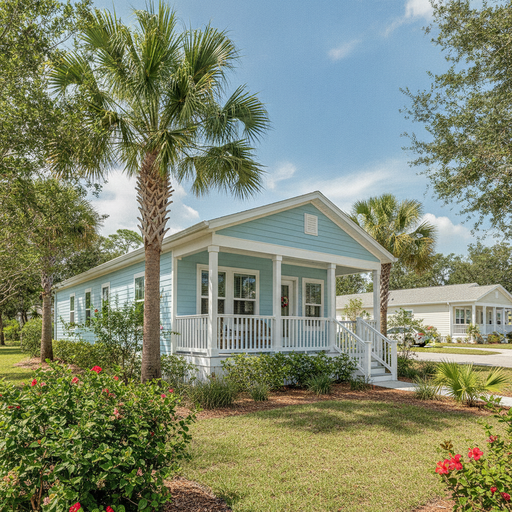
Modern manufactured homes are often indistinguishable from site-built houses. They feature granite countertops, energy-efficient appliances, and high-pitched rooflines. In Florida, they are built to withstand significant wind loads, often performing better than older stick-built homes during tropical storms. This evolution in quality is a major reason why the affordability of these homes is such a hot topic; you aren’t just buying a temporary shelter; you are buying a permanent, high-quality residence at a fraction of the cost.
The Price Gap: Comparing the Numbers
The primary driver for the surge in mobile home popularity is, quite simply, the price tag. In Florida, the median price for a single-family site-built home has hovered around $400,000 to $450,000 in many popular counties. In contrast, a brand-new, multi-section manufactured home can often be purchased for between $120,000 and $180,000, depending on the amenities and location.
Even when you factor in the cost of land or monthly lot rent, the math remains compelling. For a young couple starting their careers or a senior on a fixed income, the difference of $200,000 in principal is life-changing. It’s the difference between being “house poor” and having the disposable income to actually enjoy the Florida lifestyle—the fishing trips, the theme parks, and the beachfront diers.
The “Lot Rent” Dilemma: A New Challenge to Affordability
While the purchase price of the home itself remains affordable, there is a growing challenge in the Florida market: the rise of corporate-owned mobile home parks. Traditionally, many parks were “mom-and-pop” operations. In the last decade, however, large private equity firms have realized that mobile home parks are a “gold mine” of steady recession-proof income.
When an investment firm buys a park, residents often see their monthly lot rent—the fee paid to occupy the land—increase by 20%, 30%, or even 50% over a few years. This creates a unique vulnerability. While the resident owns the home, they do not own the land beneath it. Moving a modern double-wide manufactured home can cost upwards of $10,000 to $20,000, making it physically and financially impossible for many residents to leave when rents rise.
To combat this, many Floridians are seeking out “Resident-Owned Communities” (ROCs) or purchasing their own small parcels of land. Ownership of the land is the ultimate hedge against inflation and the most secure way to ensure long-term housing affordability in the state.
Zoning and the Struggle for Space
If mobile homes are such a great solution, why aren’t there more of them? The answer often lies in local government chambers. “Not In My Backyard” (NIMBY) sentiment remains a hurdle. Many Florida counties have restrictive zoning laws that prevent the placement of manufactured homes in certain areas, citing concerns about property values—fears that are largely debunked by modern appraisal data.
Advocates are currently pushing for “missing middle” housing legislation that would make it easier to place manufactured homes on smaller urban lots. By diversifying zoning, Florida could potentially unlock thousands of affordable units without the need for massive government subsidies. For the prospective buyer, this means that finding the right location often requires a bit of “detective work” to understand local ordinances and land-use restrictions.
Weathering the Storm: Insurance and Safety
You caot talk about housing in Florida without talking about hurricanes. A common misconception is that mobile homes are “tornado magnets” or inherently unsafe. While older pre-1976 models are indeed vulnerable, homes built to current Florida standards are remarkably resilient. They are anchored with heavy-duty steel straps and built to handle winds exceeding 150 mph in coastal zones.
The real challenge, however, is insurance. Florida’s insurance market is currently in a state of flux, with many major carriers pulling out of the state. For mobile home owners, finding affordable coverage can be a hurdle. Most residents rely on Citizens Property Insurance (the state-backed “insurer of last resort”). While coverage is available, the premiums are a significant part of the monthly budget that buyers must account for when calculating true affordability.
Tips for Navigating the Florida Mobile Home Market
If you are considering this path to affordability, here are a few steps to ensure your investment is sound:
- Verify the HUD Tag: Ensure any pre-owned home has its HUD certification label. This is essential for financing and insurance.
- Research the Park Management: If buying in a land-lease community, look at the history of rent increases. Ask neighbors about how the park is managed and if there are plans to sell to a developer.
- Consider “Chattel” vs. Real Estate Loans: Financing for mobile homes is different. If the home is on leased land, you will likely need a “chattel loan” (personal property loan), which often has higher interest rates than a traditional mortgage.
- Get a Specialized Inspection: Don’t use a general home inspector. Find one who specializes in manufactured housing to check the vapor barrier, the tie-downs, and the specific structural elements unique to these homes.
The Future of Affordability in the Sunshine State
Florida’s population is not going to stop growing. People will always want to move to the land of no state income tax and year-round sunshine. As the price of traditional housing remains out of reach for the average worker, manufactured housing is shifting from a “niche” option to a primary solution.
The key to maintaining this affordability lies in a combination of smart policy, resident-owned land models, and a continued focus on high-quality construction. For people like Sarah, the Ohio teacher, a mobile home wasn’t a compromise—it was a strategic choice that allowed her to live her best life. In the end, a home is more than its foundation; it is the freedom it provides. In Florida, mobile housing remains one of the few remaining keys to that freedom.
Conclusion
Affordability in Florida is a complex puzzle, but mobile and manufactured homes offer a significant piece of the solution. By lowering the barrier to entry for homeownership, these dwellings provide stability and community for those who might otherwise be priced out of the state. While challenges like lot rent increases and insurance costs remain, the modern manufactured home stands as a testament to how iovation can keep the Florida Dream alive for everyone, not just the wealthy. Whether you are looking for a retirement retreat or a starter home, the mobile housing market in Florida is worth a serious, second look.