
The Magic of the California Aesthetic
Imagine driving down a sun-drenched street in a quiet neighborhood in Los Angeles or the Silicon Valley. The sun is just starting to dip below the horizon, casting a warm, golden glow over the landscape. You turn the corner and see it—a home that doesn’t just sit on its lot, but breathes with the environment. It is sleek, yet warm. It is minimalist, yet inviting. This is the essence of the modern California exterior.
SUBMIT YOUR DETAILS FOR
For decades, California style was defined by red-tiled roofs and heavy stucco walls. While that Mediterranean charm will always have a place in our hearts, there is a new movement sweeping the Golden State. Homeowners are looking for ways to blend the indoors with the outdoors, prioritizing clean lines, sustainable materials, and a sense of “quiet luxury.” If you have been looking at your home and feeling like it is stuck in a different era, it might be time for a transformation. Upgrading your exterior isn’t just about increasing property value; it’s about creating a sanctuary that reflects the modern lifestyle.
The Power of a High-Contrast Palette
The first thing anyone notices about a modern home is the color. Gone are the days of “builder beige” and muted tans. Modern California homes lean heavily into high-contrast color palettes that make architectural details pop. The most popular trend right now is the combination of crisp, gallery white with deep charcoal or “Iron Ore” accents.
Think about painting your main stucco body in a bright, clean white. This reflects the intense California sun and keeps the home feeling cool. To balance that brightness, use a dark, matte finish on the window frames, trim, and garage doors. This creates a visual frame for the house, making the structure look more grounded and intentional. If you want something even bolder, “dark mode” homes—where the entire exterior is a deep navy or slate grey—are becoming a staple in modern hillside architecture, especially when paired with warm wood elements to prevent the look from feeling too cold.
Natural Wood Accents: Bringing Warmth to Minimalism
One of the risks of modern design is that it can sometimes feel clinical or sterile. To combat this, California designers use natural wood as a primary design element. Cedar, redwood, and ipe are the superstars of this movement. Whether it is a vertical slat wall near the entrance or a horizontal wood fence that wraps around the property, these organic textures provide a much-needed bridge between the concrete world and the natural environment.
The beauty of wood is its imperfection. The grain patterns and varying tones add a layer of sophistication that paint simply caot replicate. For a truly modern look, consider adding wood cladding to a specific architectural feature, like an overhanging balcony or a recessed entryway. When the warm glow of an evening light hits those wooden slats, the home transforms into something that feels more like a luxury resort than a standard residence.
The Grand Entrance: More Than Just a Door
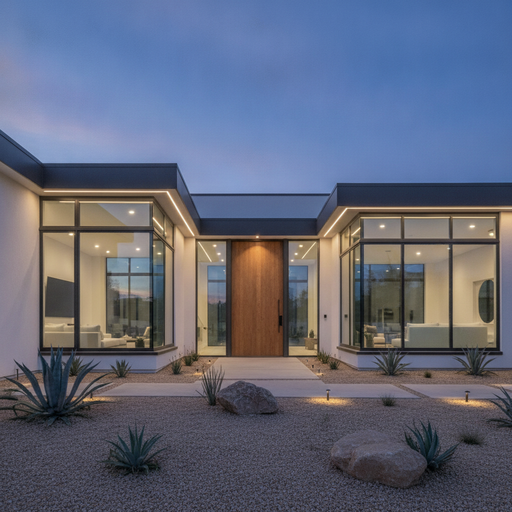
In a modern California home, the front door is the “handshake” of the house. It sets the tone for everything that lies within. The standard six-panel door is being replaced by massive, oversized pivot doors. These doors don’t just swing; they rotate on a concealed axis, creating a sense of weight and importance.
Glass is another crucial element. Large frosted glass panels or clear side-lites allow natural light to flood the foyer while maintaining a sense of privacy. Hardware has also gone minimalist—long, vertical pull bars in matte black or brushed gold have replaced the traditional round doorknob. This change might seem small, but it is often the single most impactful upgrade you can make to your home’s curb appeal.
Xeriscaping: Sustainability as a Design Choice
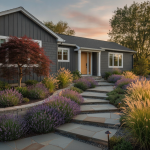
In California, we are all too familiar with the importance of water conservation. The sprawling green lawns of the past are quickly becoming relics. Modern landscaping—often called xeriscaping—prioritizes drought-resistant plants that thrive in our Mediterranean climate. But don’t be fooled; “drought-resistant” does not mean a yard full of brown dirt.
A modern landscape is a curated gallery of textures. We use agave, barrel cacti, and ornamental grasses like Mexican Feather Grass to create movement and visual interest. Instead of mulch, designers are opting for smooth river stones, decomposed granite (DG), or black lava rock to create clean, defined beds. These materials don’t just save water; they provide a structured, architectural look that perfectly complements the straight lines of a modern home. Add a few concrete pavers with “steppers” separated by small pebbles or creeping thyme, and you have a walkway that looks like it belongs in an architectural magazine.
Lighting as an Architectural Tool
A modern exterior upgrade isn’t complete until you’ve considered how the home looks after the sun goes down. Lighting is no longer just about safety; it’s about drama. Modern California homes utilize “layered lighting” to highlight the best features of the property.
Up-lighting a majestic olive tree or a cluster of architectural yuccas creates stuing silhouettes against the house. Linear LED strips tucked under the edges of stairs or along the underside of roof overhangs provide a futuristic “hovering” effect. The goal is to avoid harsh, direct light. Instead, use soft, warm-toned lights to wash over textures like stone or wood. This creates a welcoming atmosphere that makes the transition from the driveway to the front door feel like a journey.
Seamless Transitions: The Indoor-Outdoor Flow
The true hallmark of California modernism is the blurring of the lines between inside and out. If your renovation allows for it, replacing a standard sliding door or a back wall with multi-slide or bifold glass doors is the ultimate upgrade. These “disappearing walls” allow your living room to flow directly onto your patio.
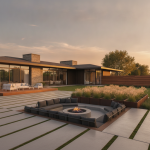
To make this transition feel seamless, use the same flooring material inside and out. For example, if you have large-format porcelain tiles in your kitchen, continue that same tile (in an outdoor-rated finish) onto your back deck. This trick of the eye makes both spaces feel significantly larger. Pair this with a minimalist fire pit and some low-profile outdoor furniture, and you’ve created an outdoor living room that you’ll use every single day.
Conclusion: The Investment in Your Lifestyle
Upgrading your California home to a modern aesthetic is a journey of subtraction and refinement. It’s about removing the clutter of outdated decorative elements and letting the materials and the environment speak for themselves. Whether you are starting with a fresh coat of high-contrast paint, installing a stuing pivot door, or reimagining your garden with sustainable succulents, each change brings you closer to a home that feels light, airy, and grounded.
Modern design isn’t just a trend; it is a response to how we live today. We value simplicity, we value nature, and we value a space that offers peace in a busy world. By investing in these exterior upgrades, you aren’t just changing the way your neighbors see your house—you are changing the way you feel every time you pull into your driveway. Welcome home to the modern California dream.