
The Silent Power of a First Impression
We’ve all had that moment. You’re driving through a quiet, tree-lined neighborhood when suddenly, one particular house catches your eye. You slow down, perhaps even stop for a second, just to admire it. It’s not necessarily the largest house on the block, but it has a certain “soul”—an aura of sophistication and timelessness that makes it stand out from the cookie-cutter designs nearby. That feeling is the result of a masterfully executed exterior facade.
SUBMIT YOUR DETAILS FOR
Your home’s exterior is more than just a shell; it is the handshake your house offers to the world. It tells a story about who lives inside, their taste, and their attention to detail. If you’ve been feeling like your home has lost its luster or simply looks a bit dated, a premium facade upgrade is one of the most rewarding investments you can make. Not only does it significantly boost your property’s market value, but it also transforms your daily experience of “coming home” into a luxury event.
In this guide, we will explore the world of high-end exterior renovations, moving beyond simple paint jobs to architectural transformations that breathe new life into your living space.
1. The Art of Natural Stone and Modern Cladding
One of the most effective ways to instantly elevate a home’s status is through the use of high-quality, natural materials. For decades, vinyl and basic brick were the standards, but premium homes today are leaning into texture and organic beauty.
Authentic Stone Veneer
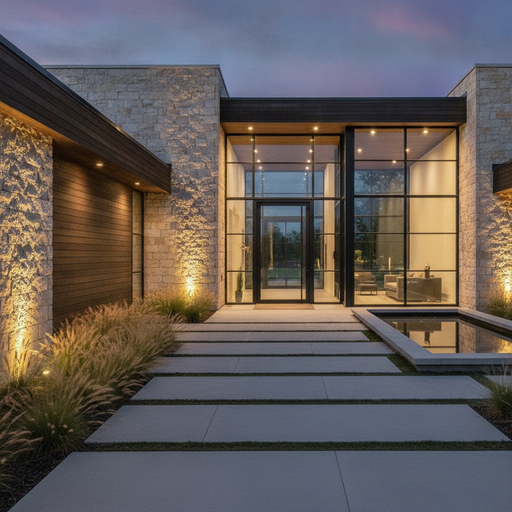
Unlike the plastic-looking faux stone of the past, moderatural stone veneers offer the weight and texture of solid stone without the structural burden. Consider limestone for a Mediterranean or French Country vibe, or dark slate for a sleek, contemporary look. The key is in the “dry-stack” technique, where stones are placed tightly together without visible mortar lines, creating a clean, high-end finish that looks like it has been there for centuries.
Sustainable Hardwood Siding
There is nothing quite like the warmth of real wood. Premium upgrades often feature thermally modified wood or sustainably sourced hardwoods like Ipe or Cedar. When used as an accent—perhaps on a cantilevered section of the second floor or framing the entryway—wood creates a stuing contrast against colder materials like glass or concrete.
2. Redefining the Grand Entrance: The Pivot Door
If the facade is the handshake, the front door is the focal point. For a truly premium upgrade, the standard 36-inch door simply won’t do. Enter the “Pivot Door.”
A pivot door rotates on a spindle rather than swinging on side-mounted hinges. This allows for massive, oversized doors—sometimes five or six feet wide—that glide open with the touch of a finger. Imagine a solid white oak door with integrated LED strips and a custom-etched pull bar. It changes the entire architectural language of your entryway, signaling to guests that they are entering a space of curated luxury.
3. High-Performance Fenestration: Windows as Art
Windows are often called the “eyes” of the home. In older designs, windows were small and functional. In a premium facade upgrade, windows become architectural statements. High-end homeowners are increasingly opting for “thin-profile” aluminum or steel frames.
These frames allow for much larger panes of glass, blurring the line between the indoors and the outdoors. Floor-to-ceiling glass walls not only modernize the exterior but also flood your interior with natural light. If you really want to push the envelope, consider “corner windows” where two glass panes meet without a visible corner post. It’s a feat of engineering that provides an unobstructed view and a ultra-modern aesthetic that screams premium quality.
4. The Magic of Architectural Lighting
Many homeowners spend thousands on materials only to let them disappear when the sun goes down. A premium facade is a 24-hour masterpiece. Professional architectural lighting is about more than just “security lights”; it’s about layers and shadows.
- Uplighting: Placing fixtures at the base of stone walls or large trees to highlight texture and height.
- Sconce Placement: Choosing designer fixtures that act as “jewelry” for the house during the day and provide a soft, welcoming glow at night.
- Integrated LED Strips: Hiding light strips under stair treads, roof overhangs, or within wall niches to create a floating, ethereal effect.
Smart lighting systems allow you to program different “scenes.” You might have a “Welcome Home” scene that softly illuminates the path to the door, or a “Gallery” scene that highlights the architectural peaks of the roofline.
5. Modernizing the Roofline and Gutters
The roof is a massive part of your home’s visual real estate. If your roof is traditional asphalt shingles, you’re missing an opportunity. A premium upgrade often involves switching to standing-seam metal roofing or slate tiles.
Metal roofing, specifically in dark bronze or matte black, provides a crisp, linear look that pairs beautifully with modern farmhouse or industrial styles. To take it a step further, consider your gutters. Most homes have white K-style aluminum gutters that are meant to be hidden. In a premium upgrade, you might choose copper gutters or “half-round” styles with decorative brackets. Over time, copper develops a beautiful patina that adds a layer of historical prestige to the home.
6. Landscaping as a Structural Element
You caot separate the facade from the land it sits on. Premium upgrades treat landscaping as “hardscaping”—an extension of the house itself. This means moving away from messy flower beds and toward structured, architectural greenery.
Think about concrete planter boxes that match the color of the house, or a series of tiered retaining walls made from the same stone used on the facade. A well-designed “hardscape” includes a wide, inviting walkway—perhaps using oversized pavers with grass or river stones in between—leading the eye directly to the front door. This creates a sense of “procession” and makes the property feel larger and more intentional.
7. The Psychology of the Color Palette
A premium look is often achieved through restraint. While bright colors can be fun, luxury facades usually stick to a sophisticated, monochromatic, or earthy palette. High-contrast combinations are currently very popular in the high-end market.
For example, a “Charcoal and Oak” palette involves dark grey siding or brick paired with warm wood accents. Alternatively, an “Off-White and Bronze” palette offers a timeless, airy feel. The key is to use different textures rather than different colors to create visual interest. When the materials are high-quality, you don’t need “loud” colors to get attention.
Conclusion: The Investment in Excellence
Upgrading your home’s facade is a journey from the functional to the inspirational. It requires a shift in perspective—viewing your home not just as a place to sleep, but as a canvas for design. Whether it’s the tactile feel of a natural stone wall, the smooth glide of a pivot door, or the soft glow of well-placed lights, these premium details work together to create a cohesive, stuing whole.
While these upgrades require a significant initial investment, the returns are multi-faceted. You gain an immediate increase in property value, a more durable and weather-resistant home, and most importantly, the pride of owning a residence that is truly a work of art. So, take a walk outside, look at your home with fresh eyes, and imagine the possibilities. Your dream facade is waiting to be uncovered.