
The Morning After the Moving Truck Leaves
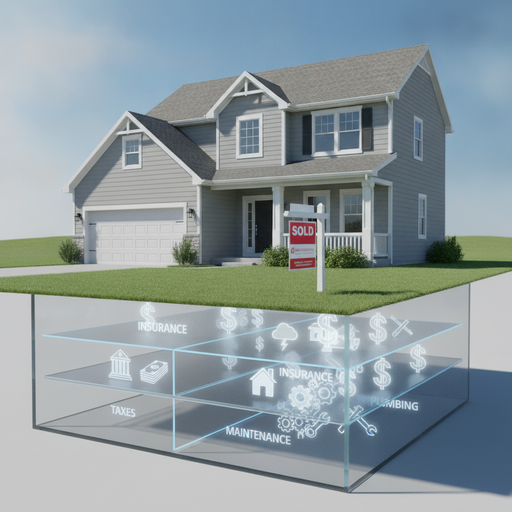
Imagine this: you have finally done it. The boxes are stacked in the living room of your very own suburban sanctuary in Austin, Charlotte, or perhaps a quiet corner of Ohio. You have the keys in your pocket, and for the first time in your life, you aren’t paying a landlord’s equity—you are building your own. It is the quintessential American Dream. But as the sun sets on your first night as a homeowner, a small realization begins to sink in. The monthly mortgage payment you spent months calculating is only the tip of a very large, very expensive iceberg.
SUBMIT YOUR DETAILS FOR
For many Americans, the transition from renting to owning is a rite of passage that comes with a steep learning curve. While we often obsess over the purchase price and the interest rate, the “true cost” of homeownership in the United States is a complex tapestry of taxes, insurance, maintenance, and those pesky “middle-of-the-night” emergencies. If you are preparing to jump into the market, or if you have just moved in, understanding these layers of expenses is the difference between financial stability and constant stress.
The Upfront Hurdle: More Than Just a Down Payment
Most first-time buyers spend years saving for that elusive 20% down payment. While many programs allow for as little as 3% or 3.5% down, the initial cash outlay doesn’t stop there. Closing costs are the first “hidden” shock for many. These usually range from 2% to 5% of the home’s purchase price. On a $400,000 home, that is an additional $8,000 to $20,000 due the day you sign the papers.
What exactly are you paying for in those closing costs? It is a laundry list of administrative and legal necessities:
- Loan Origination Fees: What the lender charges to process your application.
- Appraisal Fees: Ensuring the house is actually worth what you are paying.
- Title Insurance: Protecting you and the lender against future ownership disputes.
- Government Recording Fees: Because the county needs its cut to register the deed.
The Monthly Core: Understanding PITI
In the world of US real estate, the acronym PITI stands for Principal, Interest, Taxes, and Insurance. This is the heartbeat of your monthly financial commitment. While the principal and interest are determined by your loan terms, the “T” and the “I” are the variables that can catch you off guard.
Property Taxes: The Gift That Keeps on Taking
Unlike a fixed-rate mortgage, property taxes are not static. Depending on where you live, these can be a minor aoyance or a massive financial burden. In states like New Jersey or Illinois, property taxes are notoriously high, sometimes exceeding $10,000 a year for a modest home. Even if your mortgage is paid off, you never truly “stop” paying for your land. Furthermore, as the value of your home increases, the local government will likely reassess your property, leading to an “escrow shortage” and a sudden jump in your monthly payment.
Homeowners Insurance and the Rise of Climate Costs
Standard homeowners insurance is mandatory if you have a mortgage. However, in recent years, premiums across the United States have skyrocketed. If you are buying in Florida or California, you might face astronomical rates due to hurricane or wildfire risks. Additionally, standard policies rarely cover floods or earthquakes. Adding these riders can add hundreds of dollars to your monthly budget, and in some high-risk zones, getting coverage at all is becoming a challenge.
The 1% Rule: Maintenance and the Silent Budget Killer
Ask any seasoned homeowner what they miss most about renting, and they will likely say “calling the super.” When the HVAC system dies in July or the water heater bursts at 2 AM, there is no one to call but a contractor—and you are the one signing the check.
Financial experts often recommend the “1% Rule”: set aside at least 1% of your home’s value every year for maintenance and repairs. For a $450,000 home, that is $4,500 a year, or about $375 a month. Some years you might only need to buy some lightbulbs and air filters, but other years you might need a $15,000 roof replacement. This fund isn’t a luxury; it’s a necessity for survival in the American housing market.
The HOA: The Neighborhood “Tax”
If you are moving into a modern subdivision or a condo complex, you will likely encounter a Homeowners Association (HOA). These fees can range from $50 a month for basic road maintenance to over $1,000 a month for high-end condos with gyms, pools, and security. While HOAs help maintain property values and provide amenities, they are a non-negotiable cost. Failing to pay them can lead to liens on your property or even foreclosure. Always scrutinize the HOA’s financial health before buying; if they don’t have enough in reserves, you could be hit with a “special assessment”—a one-time bill for thousands of dollars to fix a communal roof or repave the parking lot.
Utilities and the Cost of Space
Many new homeowners upgrade from a 700-square-foot apartment to a 2,000-square-foot house and are shocked by their first utility bill. Heating and cooling a larger volume of space is significantly more expensive. In the US, utility costs vary wildly by region. A summer in Arizona means a $400 electricity bill to keep the AC ruing, while a winter in Maine means spending thousands on heating oil or natural gas.
Then there are the services you might have taken for granted as a renter:
- Water and Sewer: Often bundled in rent, but a separate, metered expense for owners.
- Trash Pickup: In many municipalities, you must pay a private company or the city for waste removal.
- Lawn Care and Landscaping: Whether you buy a lawnmower and spend your Saturdays sweating or hire a service, keeping your curb appeal up costs money.
The “Soft Costs”: Making a House a Home
Beyond the structural needs, there is the psychological and aesthetic cost of homeownership. You will find yourself making frequent trips to stores like Home Depot or Lowe’s. You need a ladder. You need a drill. You need curtains for twenty windows instead of three. You want to paint the “builder beige” walls a trendy sage green. Individually, these costs are small. Collectively, they can drain a savings account in the first six months of ownership.
Is Homeownership Still Worth It?
After looking at the mounting bills, taxes, and maintenance headaches, you might wonder if renting is the smarter financial move. However, homeownership remains the primary vehicle for wealth creation for the American middle class. Unlike rent, a portion of your mortgage payment goes toward equity—essentially a forced savings account. Over time, as home values appreciate and your mortgage balance decreases, your net worth grows in a way that is difficult to replicate through other investments.
The key to successful homeownership in the United States isn’t just having enough money to buy the house; it’s having the discipline to budget for the costs that don’t appear on the sales listing. It is about moving from a mindset of “consumption” to a mindset of “stewardship.”
Conclusion: Preparation is the Ultimate Tool
The journey to owning a home is a marathon, not a sprint. By accounting for property tax fluctuations, setting up a robust maintenance fund, and understanding the nuances of your local climate and HOA rules, you can protect yourself from the financial shocks that derail so many buyers. The American Dream is still very much alive, but it requires a sharp pencil and a clear-eyed view of the total balance sheet. When you finally sit on your porch, knowing that every nail and shingle is accounted for, the peace of mind is worth every pey.