
The Soul of the Golden State: Defining California Modern
Imagine driving down a winding road in the Hollywood Hills or cruising along the Pacific Coast Highway as the sun begins its slow descent toward the ocean. The light turns a syrupy gold, reflecting off vast expanses of glass and catching the sharp, clean lines of a silhouette against the sky. This is the essence of California modern exterior design. It is more than just a trend; it is a lifestyle that celebrates the intersection of human ingenuity and the raw beauty of the natural world.
SUBMIT YOUR DETAILS FOR
For decades, California has been the epicenter of architectural iovation. From the mid-century masterpieces of Joseph Eichler to the cutting-edge sustainable retreats of today, the state has pioneered a look that is instantly recognizable and globally coveted. But what exactly makes a home “California Modern”? It is a delicate balance of minimalism, warmth, and an uncompromising commitment to the “indoor-outdoor” flow. In this guide, we will explore the elements that define this iconic style and how you can bring that breezy, sophisticated West Coast vibe to your own property.
Seamless Integration: The Indoor-Outdoor Flow
If there is one cardinal rule of California modernism, it is that the walls should feel like suggestions, not boundaries. The California climate—temperate, suy, and inviting—demands a home that breathes. This is achieved through the extensive use of floor-to-ceiling glass walls and oversized sliding doors that disappear into pockets, effectively turning a living room into an open-air pavilion.
In a modern California exterior, the transition from the interior hardwood to the exterior deck is often flush, creating a visual continuity that makes the home feel twice as large. Designers often use the same materials for both the indoor flooring and the outdoor patio to blur the lines further. Imagine stepping out from your kitchen onto a smooth concrete terrace without ever feeling like you’ve left the room. That is the magic of seamless integration.
Materials That Tell a Story: Texture and Contrast
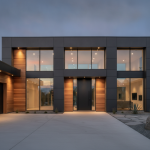
Modern design is often accused of being cold or clinical, but California modernism avoids this trap through the clever use of organic materials. The palette is a conversation between the industrial and the natural. You will often see a “material sandwich” where cold, smooth surfaces like white stucco or charcoal metal panels are balanced by the warmth of natural wood sidings.
- Western Red Cedar or Ipe Wood: These are staples for accent walls or “rainscreen” cladding. They provide a rhythmic, vertical or horizontal texture that softens the geometric sharpness of the house.
- Smooth-Coat Stucco: Unlike the heavy, swirled textures of older Spanish-style homes, modern California homes utilize a “Santa Barbara finish”—a smooth, almost buttery plaster that catches shadows beautifully.
- Black Steel Frames: Thin, black-painted aluminum or steel window frames act like a picture frame for the landscape outside, providing a sharp, industrial edge that grounds the design.
- Natural Stone: Large-scale limestone or slate walls often extend from the landscape into the home’s structure, acting as an anchor to the earth.
The Geometry of the Sky: Rooflines and Silhouettes
The silhouette of a California modern home is typically low-slung and horizontal. While traditional homes might have steep gables, modern California architecture favors flat roofs or dramatic “butterfly” roofs that tilt upward to capture more light. These low profiles are designed to mimic the horizon, ensuring the house sits nestled within its environment rather than towering over it.
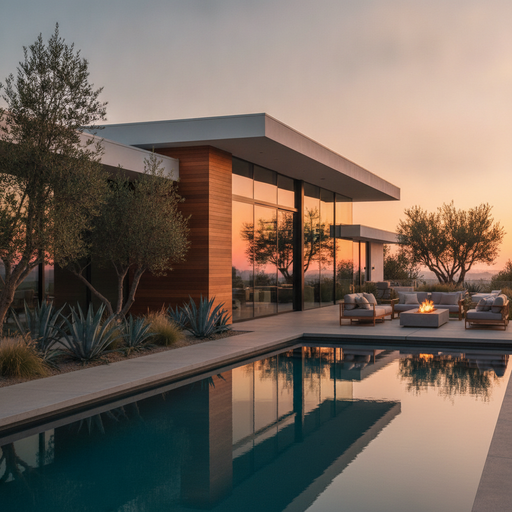
Deep overhangs, also known as “eaves,” are both a functional and aesthetic choice. Practically, they protect the vast glass surfaces from the harsh midday sun, keeping the interior cool without sacrificing the view. Aesthetically, they create long, dramatic shadows that change throughout the day, giving the house a dynamic, ever-shifting appearance.
Sustainability as a Standard: Xeriscaping and Native Beauty
In California, beauty and responsibility go hand in hand. With water conservation being a top priority, the exterior design extends far beyond the structure itself into the realm of sustainable landscaping, often referred to as xeriscaping. The days of thirsty, emerald-green lawns are being replaced by a more sophisticated, rugged aesthetic.
A modern California yard is a curated collection of drought-tolerant plants: architectural agaves, soft fountain grasses, blue fescue, and sculptural olive trees. These plants require minimal water but provide maximum visual impact. Designers often use “hardscaping”—gravel paths, decomposed granite, and large boulders—to create a desert-chic look that feels both luxury and low-maintenance. The goal is to make the home look like it grew out of the local soil rather than being dropped onto it.
The Magic of the “Fifth Room”: Outdoor Living Spaces
In a California modern home, the backyard is not just a yard; it is a fully functional extension of the floor plan. We often call this the “fifth room.” This space is usually centered around a focal point—a linear fire pit, a minimalist infinity pool, or a built-in outdoor kitchen. The furniture here is just as high-end as the furniture inside, featuring weather-resistant fabrics and mid-century inspired frames.
Lighting plays a crucial role in this “fifth room.” Rather than bright, harsh floodlights, modern exteriors use “layering.” Uplighting on a palm tree, recessed LEDs along a walkway, and the soft glow from a fire feature create a resort-like atmosphere that makes the exterior usable long after the sun has set. It’s about creating a mood that invites you to linger outside with a glass of wine and watch the stars.
Colors of the Coast: A Sophisticated Palette
The color palette of California modern design is inspired by the state’s natural geography. Think of the grays of the Pacific mist, the tans of the Mojave Desert, and the deep greens of the redwood forests. While white remains a popular choice for its ability to reflect light and keep homes cool, we are seeing a shift toward “moodier” tones.
Dark charcoal, obsidian, and “Iron Ore” are increasingly used for the main body of the house. These dark colors allow the home to recede into the shadows of the surrounding trees, making the greenery pop. When paired with warm wood accents and golden interior lighting visible through the glass, these dark homes look incredibly high-end and modern.
Conclusion: Crafting Your Own Modern Sanctuary
Modern California exterior design is more than just a set of architectural choices; it is a philosophy that values light, air, and a deep coection to nature. Whether you are building from the ground up or looking to renovate a suburban home, the principles remain the same: simplify the lines, embrace natural materials, and open your walls to the world outside.
By focusing on the harmony between the built environment and the natural landscape, you create a home that feels timeless. It is a style that doesn’t scream for attention but rather commands it through quiet confidence and thoughtful details. As the world becomes increasingly fast-paced, the California modern home remains a sanctuary—a place where the boundaries of the world melt away, and you are left with nothing but the sky, the sun, and the breeze.