
Imagine standing on a sun-drenched balcony in Palm Beach, looking out over the Atlantic. Most people immediately think of million-dollar high-rises, sprawling estates, and the high-octane luxury that defines South Florida. But while the glitter of the coastline catches everyone’s eye, a quieter, more lucrative revolution is happening just a few miles inland. It’s not in the glass towers, but in the meticulously landscaped manufactured home communities that dot the landscape. If you are looking for an investment that combines low entry costs with high-yield potential, it’s time to talk about manufactured homes in Palm Beach.
SUBMIT YOUR DETAILS FOR
The Shift from Stigma to Smart Money
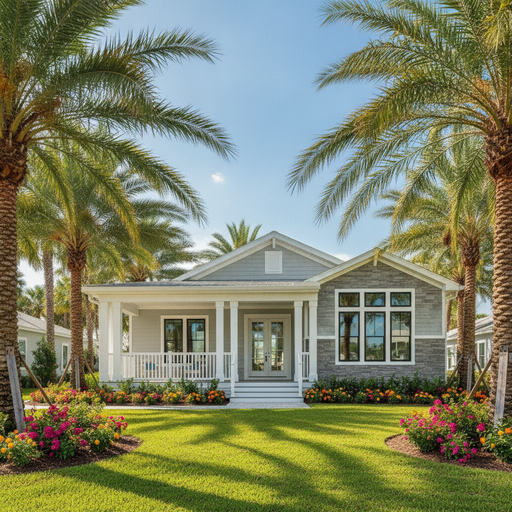
For a long time, manufactured homes suffered from an image problem. They were often dismissed as “trailers,” relegated to the fringes of the real estate conversation. However, the story has changed. Today, modern manufactured homes in Palm Beach are indistinguishable from site-built homes. They feature granite countertops, open-concept floor plans, and high-end finishes. More importantly, the financial world has woken up to their potential.
I recently spoke with an investor who spent years chasing duplexes and single-family rentals in West Palm Beach. He was exhausted by the overhead and the razor-thin margins. When he bought his first manufactured home in a land-lease community, his neighbors thought he was crazy. A year later, his return on investment (ROI) was double what he had seen in traditional real estate. Why? Because the acquisition cost was low, the demand was sky-high, and the maintenance was manageable.
Why Palm Beach is the Perfect Hub
Palm Beach County is unique. It’s a magnet for two massive demographics: the “Snowbirds” looking for affordable winter retreats and the local workforce that powers the county’s massive service and tourism economy. This creates a “perfect storm” for investors. There is a chronic shortage of affordable housing in the area, and manufactured homes fill that gap perfectly.
When you invest in a manufactured home here, you aren’t just buying a building; you are buying into a lifestyle that people crave. Many of these communities offer clubhouses, swimming pools, and social calendars that rival expensive country clubs. For a retiree from New York or a young professional working in Jupiter, these communities represent the “Florida Dream” at a price point that actually makes sense.
The Math of the Investment: Low Entry, High Yield
Let’s look at the numbers through a storytelling lens. Consider a traditional single-family home in Lake Worth or Boynton Beach. You might pay $450,000 for a fixer-upper. After renovations and closing costs, your monthly mortgage and taxes might leave you with very little cash flow after the tenant pays rent.
Now, look at a manufactured home. You can often acquire a high-quality, pre-owned unit for $80,000 to $150,000. Even with lot rent (the monthly fee paid to the community owner), the total monthly overhead is significantly lower. Because the demand for affordable housing is so high in Palm Beach, you can often command rents that provide a 10% to 15% cap rate—figures that are almost unheard of in the traditional residential market right now.
Understanding Land-Lease vs. Land-Owned Models
As you dive into the Palm Beach market, you’ll encounter two distinct paths. It’s vital to understand which one fits your investment strategy.
- Land-Lease Communities: In this scenario, you own the home, but you rent the land it sits on. This is the most common model in Florida. The advantage? A much lower purchase price. The downside? You have a monthly lot rent fee, and you are subject to the community’s rules. This is ideal for investors looking for maximum cash flow with less capital tied up in the land.
- Land-Owned (Resident-Owned) Communities: Here, you own both the home and the lot. These are rarer and more expensive, but they offer more stability and long-term appreciation of the real estate itself. These properties often qualify for traditional financing more easily than land-lease units.
Navigating Florida’s Unique Regulations
Investing in Palm Beach isn’t without its specific requirements. Because we are in a hurricane-prone zone, Florida has some of the strictest building codes in the nation for manufactured homes. When looking at potential investments, you must ensure the home is compliant with HUD (Department of Housing and Urban Development) standards and specifically “Wind Zone 3” requirements, which are mandatory for South Florida.
I always tell investors to check the “HUD Tag”—that small metal plate on the exterior of the home. It’s the birth certificate of the house. If it’s missing or if the home was built before 1976 (pre-HUD), you are looking at a much riskier investment that may be difficult to insure or finance. In Palm Beach, staying compliant isn’t just about safety; it’s about protecting your resale value.
The “Snowbird” Effect: Seasonal Rental Income
One of the most exciting strategies in Palm Beach is the seasonal rental. From January to April, the population of Palm Beach County swells. People from the Northeast and Canada are desperate for a warm place to stay. A well-furnished manufactured home in a community with a pool can often rent for double its normal monthly rate during these “peak” months. This seasonal surge can often cover your entire year’s operating expenses in just ninety days, leaving the rest of the year’s rent as pure profit.
The Maintenance Advantage
One of the biggest headaches in real estate is the “3:00 AM phone call” about a leaking roof or a broken HVAC. While manufactured homes still require maintenance, they are often easier and cheaper to repair. Many components are standardized. Furthermore, because these homes are located within managed communities, the park owners are responsible for the roads, the common areas, and often the landscaping. This reduces the “mental load” on you as the investor, allowing you to scale your portfolio faster than you could with traditional single-family homes.
Summary of Why You Should Act Now
The window for “cheap” real estate in Palm Beach is closing. As more institutional investors—the big Wall Street firms—begin buying up manufactured home parks, the individual investor needs to move quickly. The demand for “attainable luxury” is only going up. By purchasing individual units within these parks now, you are positioning yourself in a market that is resilient to economic downturns. When the economy is booming, people move to Palm Beach for the lifestyle. When the economy is tight, they move into manufactured homes for the affordability. Either way, you win.
Conclusion
Investing in manufactured homes in Palm Beach is about seeing what others miss. It’s about recognizing that “home” isn’t just about brick and mortar—it’s about value, community, and cash flow. Whether you are looking to flip units for a quick profit or build a portfolio of long-term rentals that provide a steady retirement income, Palm Beach offers a landscape ripe with opportunity. Start small, do your due diligence on park rules, and embrace the high-yield potential of this misunderstood asset class. The sun is shining on Palm Beach real estate, and for the savvy investor, the brightest spots are found in manufactured home communities.